A lasting testament to Owen Luder's geordie skyscraper
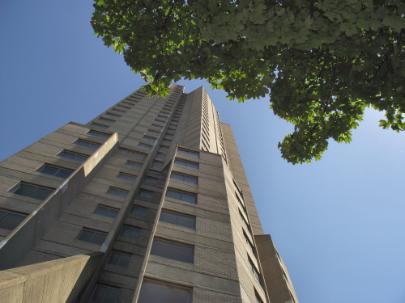 | Derwent Tower (also known as the Dunston Rocket) was a 29-storey residential tower block in Dunston, Gateshead on the south bank of the river Tyne. Due to the tower block's unusual shape, the building was nicknamed the "Dunston Rocket" during construction (even before its official Derwent Tower title) and the name has remained with locals throughout its life. The tower was designed by the Owen Luder Partnership on behalf of Whickham Council who at the time controlled the Dunston area of Gateshead. The original brief was to design three high-rise blocks of at least 22 storeys, but due to adverse ground conditions on site, the decision was made to build one tower, with the rest of the properties being low-rise blocks of 2 to 5 storeys. Despite the architect's advice against construction of a high-rise building on the site, the council were strongly in favour. Following many consultations and explanatory models of the foundations with specialists, construction of the foundation began in February 1968, and the tower was completed in March 1971. |
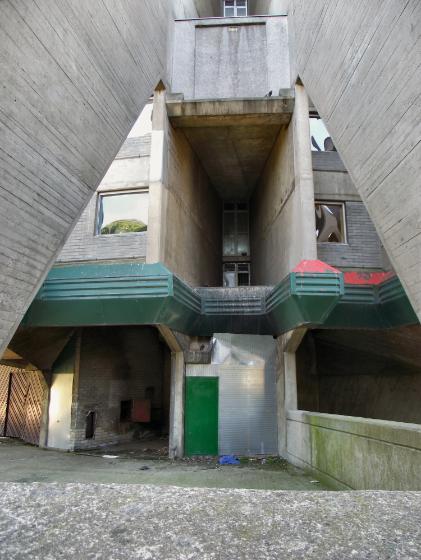
The construction of the tower was complex because of the very poor ground conditions on the site. The foundations were based on a sunken concrete caisson that was built above ground then sunk over a period of time. Caisson foundations are often found in harbour construction; to find this foundation being used in the 1960s for a local authority tower block was a first, the caisson below the tower was put to use as an underground garage area for residents. The tower itself has a very bold and striking appearance, unlike any other tower block or high rise building in the UK. Derwent Tower is of a brutalist design and retains lots of design similarities with Gateshead's "Get Carter" Trinity Square car park, also a product of the Owen Luder Partnership. The building houses two-bedroom flats up to the 10th floor, 1 bedroom flats from floor 11 to 29. The unusual features of Derwent Tower are:
|  |
Derwent Tower has been in desperate need of refurbishment for many years, making it unpopular with residents and locals alike. The tower was allowed to fall into a run-down state by neglect and lack of maintenance. Reports of services breakdowns, lift failures, water supply faults are all common but are unlikely to be a result of the buildings design or construction methods. In 2007 Gateshead Council decided to relocate residents of the Derwent Tower amid health and safety concerns over the already poor and deteriorating services.
On 17 August 2009, The tower failed in gaining its listed status on the grounds of it being a non listable building. In January of 2012, demolition of the building began after plans to demolish the building were approved.
The tower was made famous in the eighties TV advert for Tudor crisps which were "Worth climbing a mountain for". The mountain was the tower on a young lad's paper round. http://www.youtube.com/watch?v=Fgin3HO_-m0
|
